Is it teething?
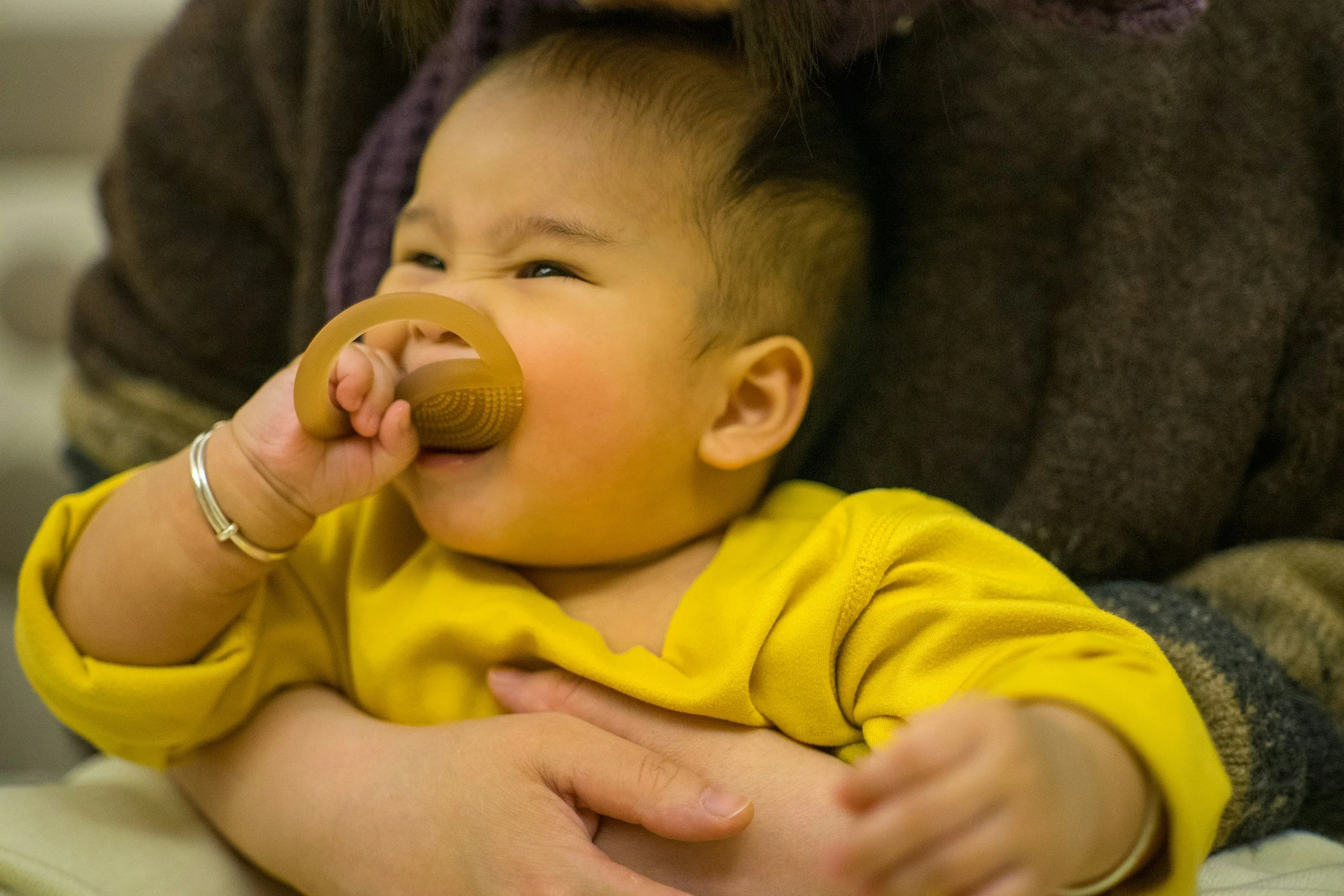
Fussiness, clinginess, irritable behavior, drooling and chewing...
Most often when parents start seeing these signs, they jump right to teething being the root cause (get it… root), and it very well could be. Lets dive a little deeper and uncover some tips to help determine if teething or something else is causing the interrupted sleep and preventing your child from sleeping well.
Teething is a long span of a child’s first few years. It typically begins around 4-8 months and lasts until 2-3 years old. It happens in spurts, with many parents reporting a difference in behavior due to the physical pain and discomfort their child exhibits during acute teething. That discomfort comes in the forms of red cheeks, swollen gums, excessive drooling, and sometimes even diarrhea leading up to the eruption of a tooth. This then leads to behavioral changes causing more whining, crying, and interrupted sleep.
With so many changes, and the desire to end that discomfort for your sweet babe, parents often come to me and ask how to help. Is teething to blame? The short answer is..maybe, but also maybe not! The truth is, sleep disruption from a new tooth usually only occurs in the 1-3 days before the tooth erupts through the gums. This often coincides with red, swollen gums. This disruption occurs because when the baby is laid down to sleep, the horizontal position places more pressure in the sinuses and the oral cavity. That pressure can lead to more pain which in turn leads to more frequent wakes.
When parents suspect teething is to blame, one of the first questions I like to ask is whether their child is generally a consistent sleeper. Take a moment to honestly reflect on this; your answer will go a long way in guiding your next steps.
Does your child have the ability to get independent, consolidated sleep otherwise, beyond these periods of teething?
If your child is reliably independent, and typically sleeps well, it becomes much easier to see teething disruption because it varies so much from the norm. If your child is not an independent sleeper, and sleep has been chronically up and down, I imagine there’s more at play in your sleep disruption than just teething.
So what to do? If your child is an independent sleeper and you are certain teething is the culprit, treat it before periods of sleep so your child is comfortable when laying down. One of my favorites are Boiron Camilia Teething Drops found here in my storefront! Give meds and/or comfort overnight as needed, and shift back to your typical response and routines once the tooth cuts through.
If your child already struggles with sleep, it is easy to blame teething when sleep takes a turn and gets even worse. It is likely, however, that teething is not the cause, or not the only cause of the disruption. They could be waking due to teething, but it could also be an imbalance schedule (check here for guidance on that) or they normally need assistance to get back to sleep in between sleep cycles, and teething is emphasizing their need for your comfort in between cycles.
If you feel ready for change, aligning their sleep with schedule, environment, routines and approach is your next move. After you do this, you may find that the symptoms you thought were due to teething lessen or disappear, and all of a sudden they have a new tooth you didn’t know was on the verge of popping through.
One important thing to keep in mind when it comes to teething is that every human has a different tolerance or pain and discomfort. Since babies are unable to tell us what they are feeling and what is going on, creating that stable sleep baseline can really help you translate what they’re trying to tell you with more ease.